01
Problem
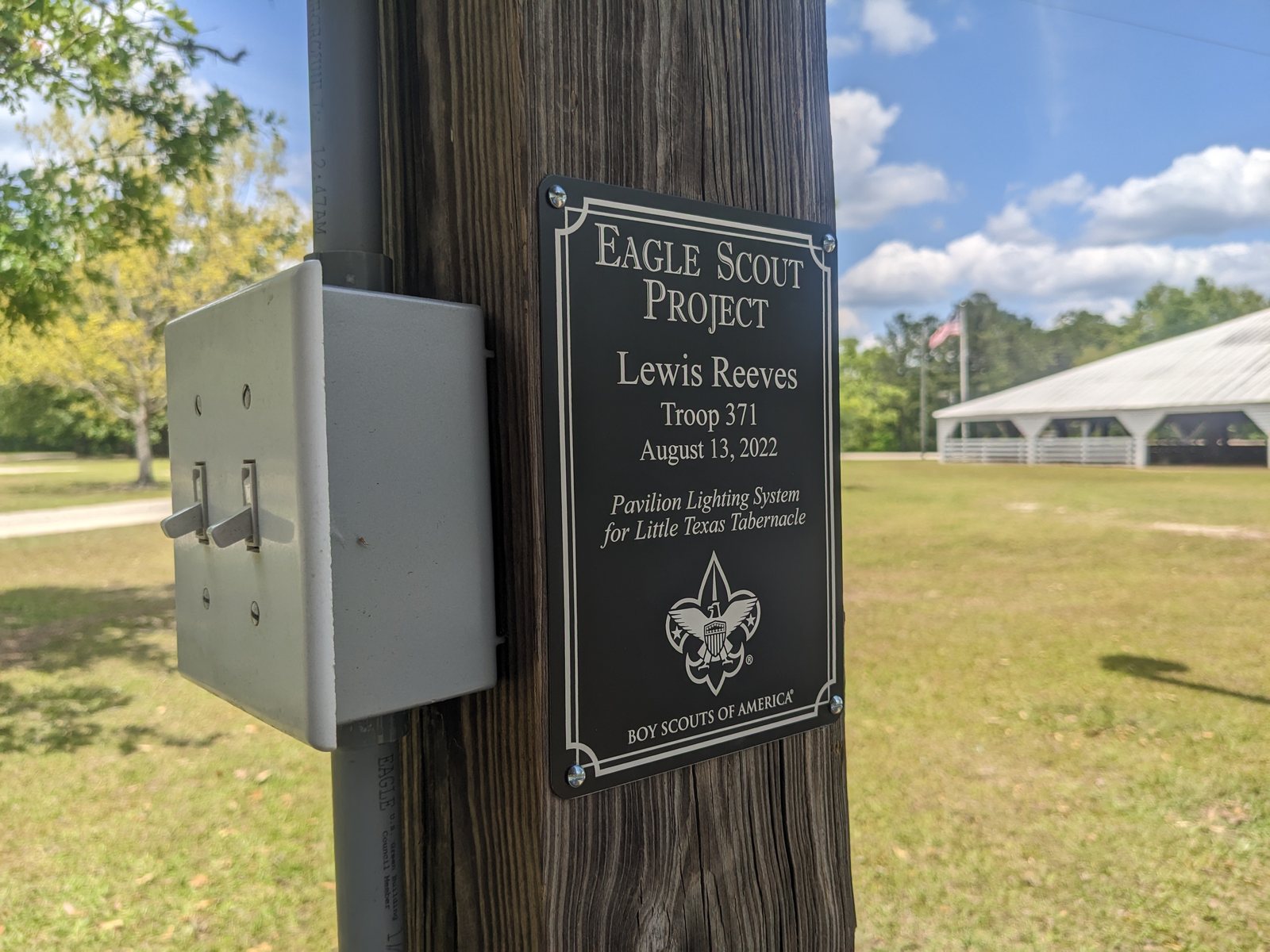
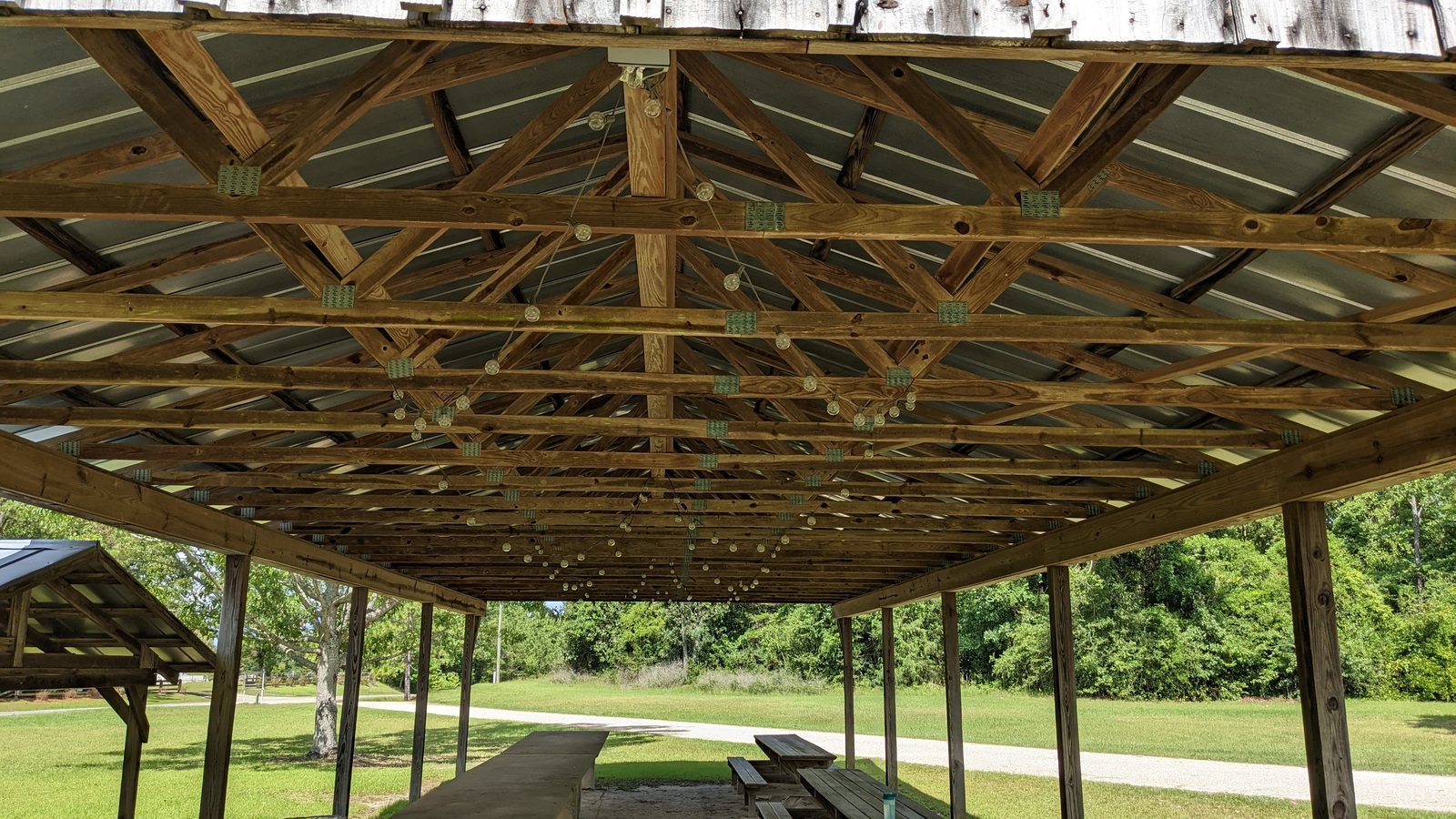
Little Texas Tabernacle has a covered fellowship area it uses for church meals, weddings, and events. Two things were wrong with it: the existing wiring was not up to current safety standards, and the area was not adequately lit. Anything held there after dark needed temporary string lights, and anything needing power needed an extension cord run from the building.
The proposal I first submitted only covered lights. It was the council review that pushed it further — and that turned out to be the more useful half of the job.
02
Requirements & constraints
The council review changed the scope in two ways. It asked me to teach the whole Electricity Merit Badge rather than the four requirements I had planned, and reviewing the site with the beneficiary added receptacles to a project that had been lights only. His words for why: so that they would not need extension cords at all.
| Constraint | What it meant |
|---|---|
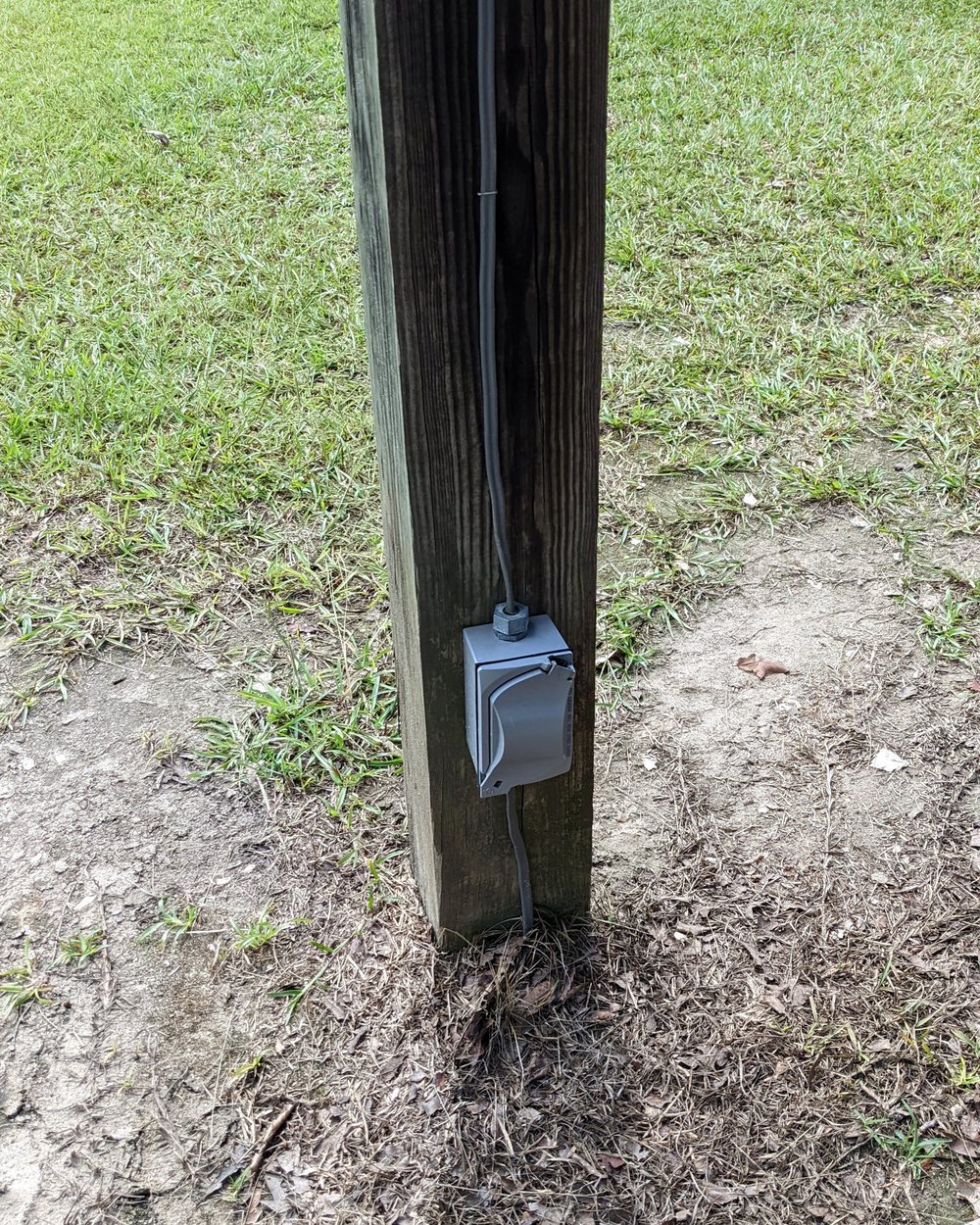
| Outdoor, uncovered runs | Direct-burial UF-B cable between poles, PVC conduit risers, weatherproof boxes |
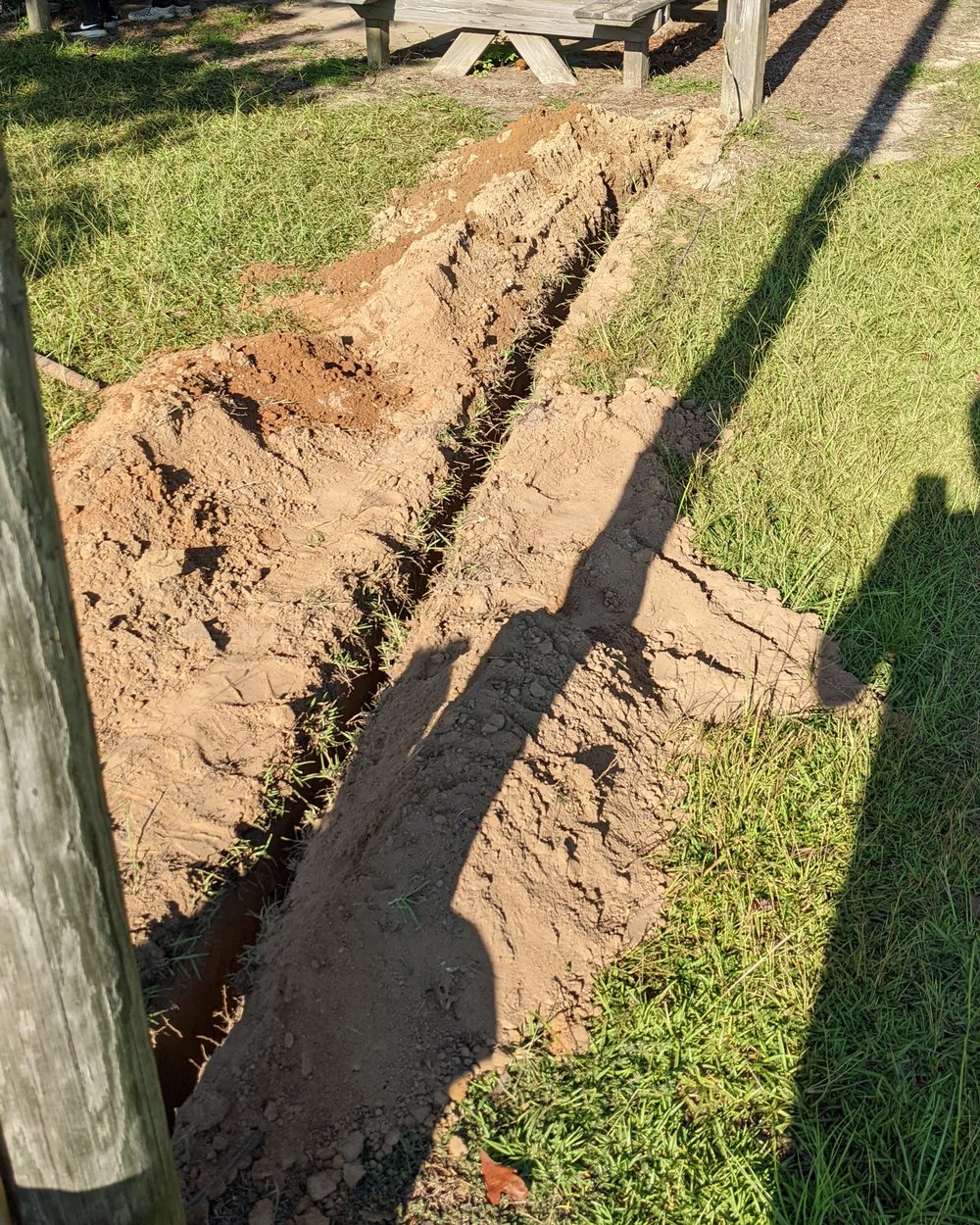
| Poles set apart across open ground | An 18-inch trench dug between them with a rented trencher |
| One working day | Everything staged and bought in advance; no trips to the store mid-build |
| Crew of scouts, mixed experience | Jobs assigned by what each person already knew how to do |
| Live service on site | Breakers switched off and sealed so nobody could re-energize the circuit mid-work |
| Budget | $750 estimated; family-funded, with donations sought from suppliers |
| Planned lighting load | 600 W, at 30 W a fixture |
03
Plan
Measuring before buying
The proposal budgeted 600 W of lighting at 30 W a fixture. Before ordering anything, I tested the brightness of the fixtures we intended to buy to find out how many we actually needed. They were far brighter than the plan assumed, and the count came down from sixteen to two.
That one test is the difference between a $650 material estimate and a $315 invoice, between sixteen ceiling penetrations and two, and between a day of hanging fixtures and an afternoon. It cost nothing but the trouble of switching one on before writing the order.
| Proposed | Installed | |
|---|---|---|
| Light fixtures | 16 | 2 |
| Lighting load | 600 W | 60 W |
| Receptacles | none | 5 |
| Material cost | $650 | $315.22 |
| Total budget | $750 | — |
What went in
14-2 and 12-2 UF-B direct-burial cable in the trenches between poles, PVC conduit risers from grade up to the boxes and on to the ceiling, weatherproof boxes on the poles themselves, illuminated 15 A switches so they can be found in the dark, and 15 A grounding receptacles.
| Item | Description | Qty | Unit | Total | Source |
|---|---|---|---|---|---|
| 14-2 wire | 14-2 UF-B WG, 50 ft | 2 | $34.48 | $68.96 | Home Depot |
| 14-2 wire | 14-2 UF-B WG, 100 ft | 1 | $56.55 | $56.55 | Home Depot |
| 12-2 wire | 12-2 UF-B WG, 25 ft | 1 | $28.25 | $28.25 | Home Depot |
| Conduit | ½″ × 10 ft PVC Schedule 40 | 4 | $9.22 | $36.88 | Home Depot |
| Light switch | 15 A 120 V illuminated | 4 | $8.67 | $34.68 | Lowe’s |
| Shop lights | 3 ft 30 W integrated LED | 2 | $16.47 | $32.94 | Donated |
| Double switch box | 2-gang 3-hole weatherproof | 1 | $10.92 | $10.92 | Donated |
| Light/outlet box | 1-gang 3-hole weatherproof | 2 | $4.73 | $9.46 | Home Depot |
| Conduit straps | ¾″ rigid, 20-pack | 1 | $8.15 | $8.15 | Home Depot |
| Outlets | 15 A grounding, 10-pack | 1 | $6.85 | $6.85 | Donated |
| Conduit adapter | ½″ PVC male terminal | 12 | $0.53 | $6.36 | Donated |
| Screws | #10 × ¾″ pan head, 100-pack | 1 | $5.97 | $5.97 | Donated |
| Outlet box | 20 cu in PVC new work | 5 | $1.08 | $5.40 | Lowe’s |
| Outlet covers | 1-gang midway duplex plate | 5 | $0.77 | $3.85 | Home Depot |
| Total | $315.22 | $63.04 donated | |||
Safety controls
Two hazards were worth planning around rather than reacting to. For electric shock, the breakers were switched off and sealed for the duration, so no one could energize a circuit somebody else had their hands in. For cuts, only scouts carrying their Totin’ Chip were allowed to handle sharp tools. A licensed electrician examined the site before and after the work. My father ran first aid, and the safety briefing was given twice — the night before and again that morning.
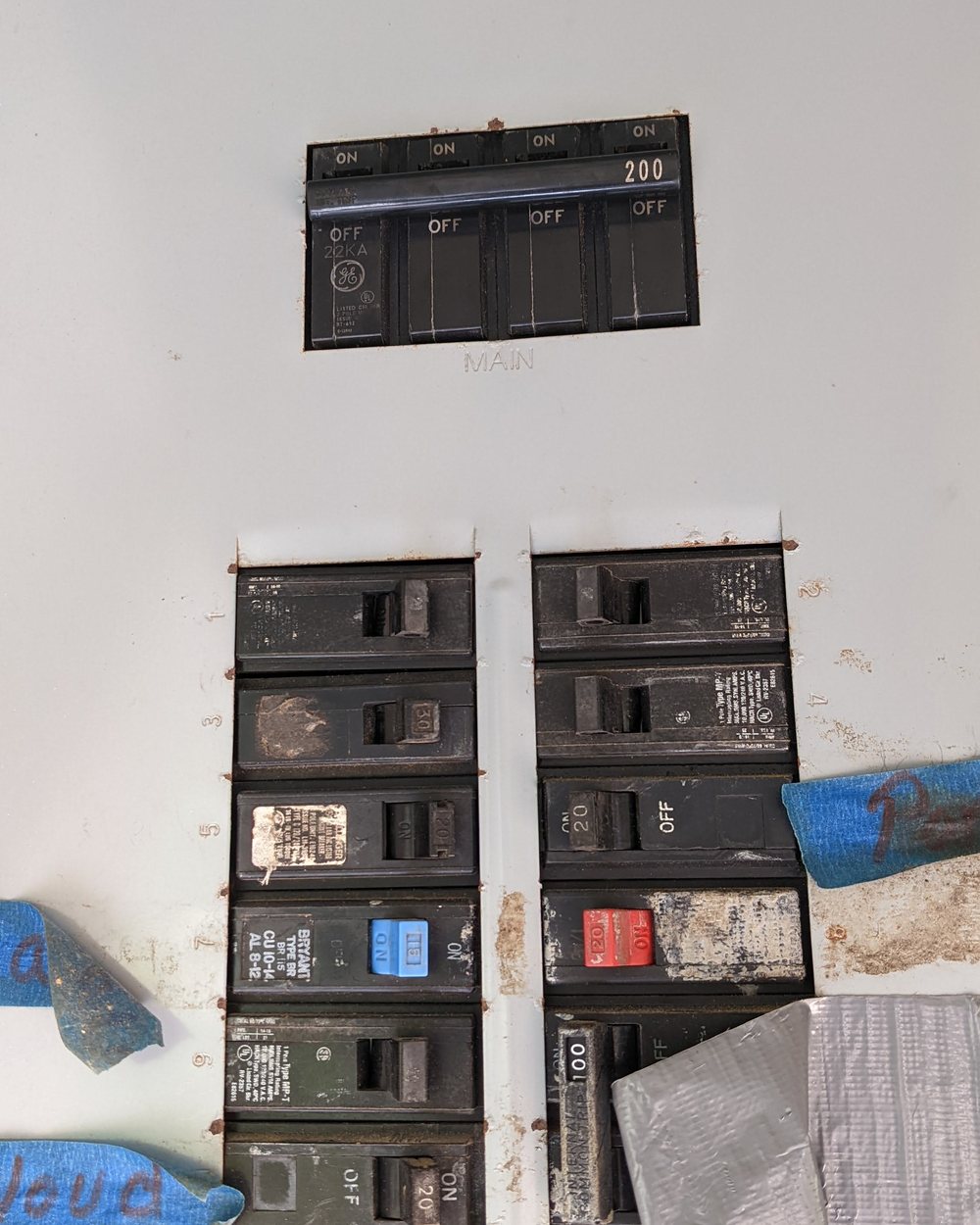
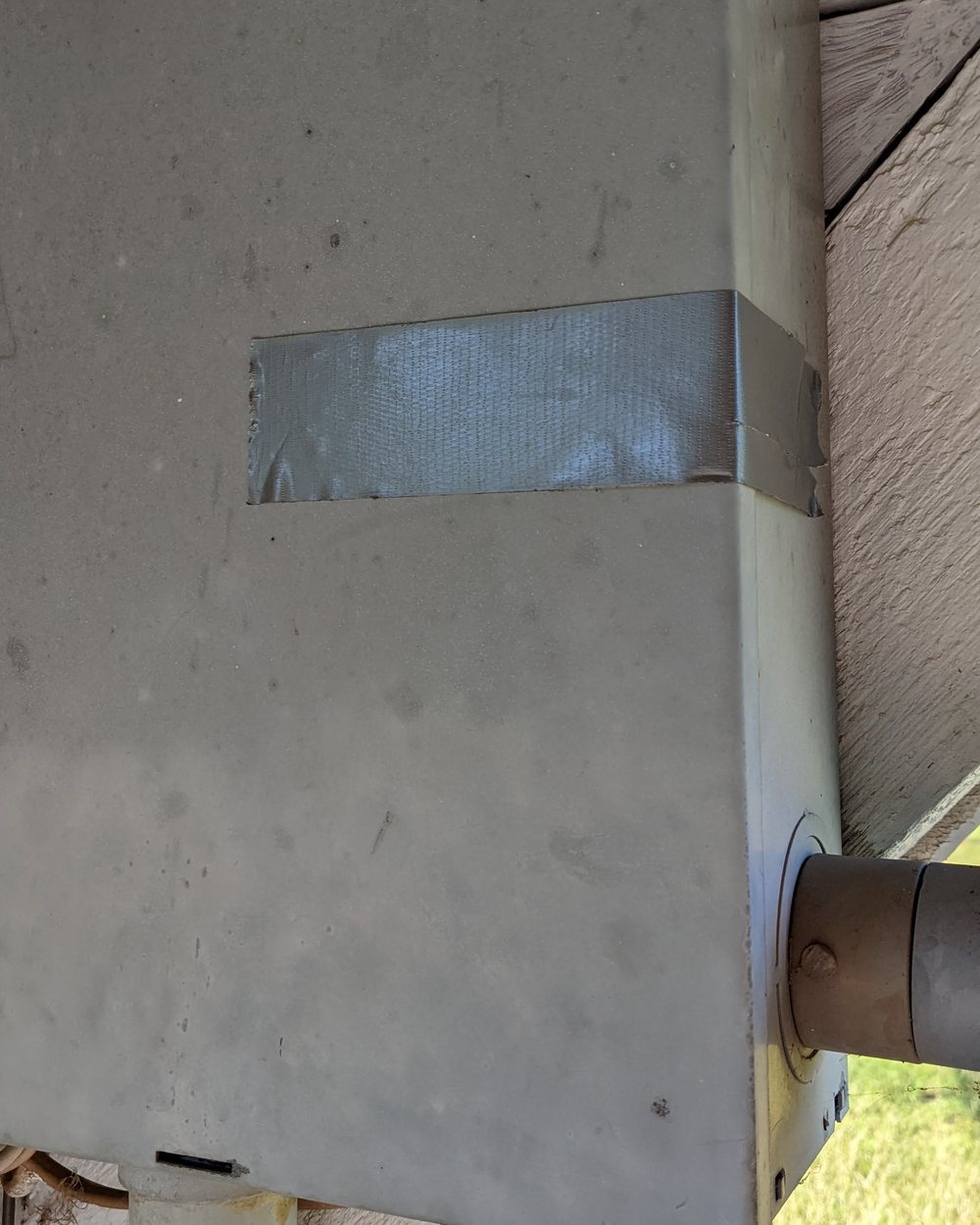
Sealing the panel is the kind of control that is easy to write into a plan and easy to skip on the day. It got photographed because it got done.
04
Build
The project ran over two days. Friday was the Electricity Merit Badge class — the full badge, taught to a group of scouts, which the council had asked for so that the people doing the wiring understood what they were handling. Saturday was the install.
The sequence: rent the trencher and dig an 18-inch trench between the poles; shut off and seal the breaker box; mount the outlet and switch boxes on the chosen poles; cut and fit conduit from the boxes down into the ground and up to the ceiling; pull wire to each box; install the outlets and switches; hang the LED fixtures and connect them; clean the site; restore power.
Jobs were assigned by what each person already knew. One adult ran the trencher. One scout pulled wire, one cut and fitted conduit, two mounted boxes, one landed the devices — that job went to someone who understood grounding — and an adult hung the fixtures. Everyone showed up on time, and the work finished in a day as planned.
05
Result
The fellowship area has lighting and five receptacles on its own switches. The church can hold events there after dark, and no longer runs extension cords from the building for power. A licensed electrician inspected the finished work.
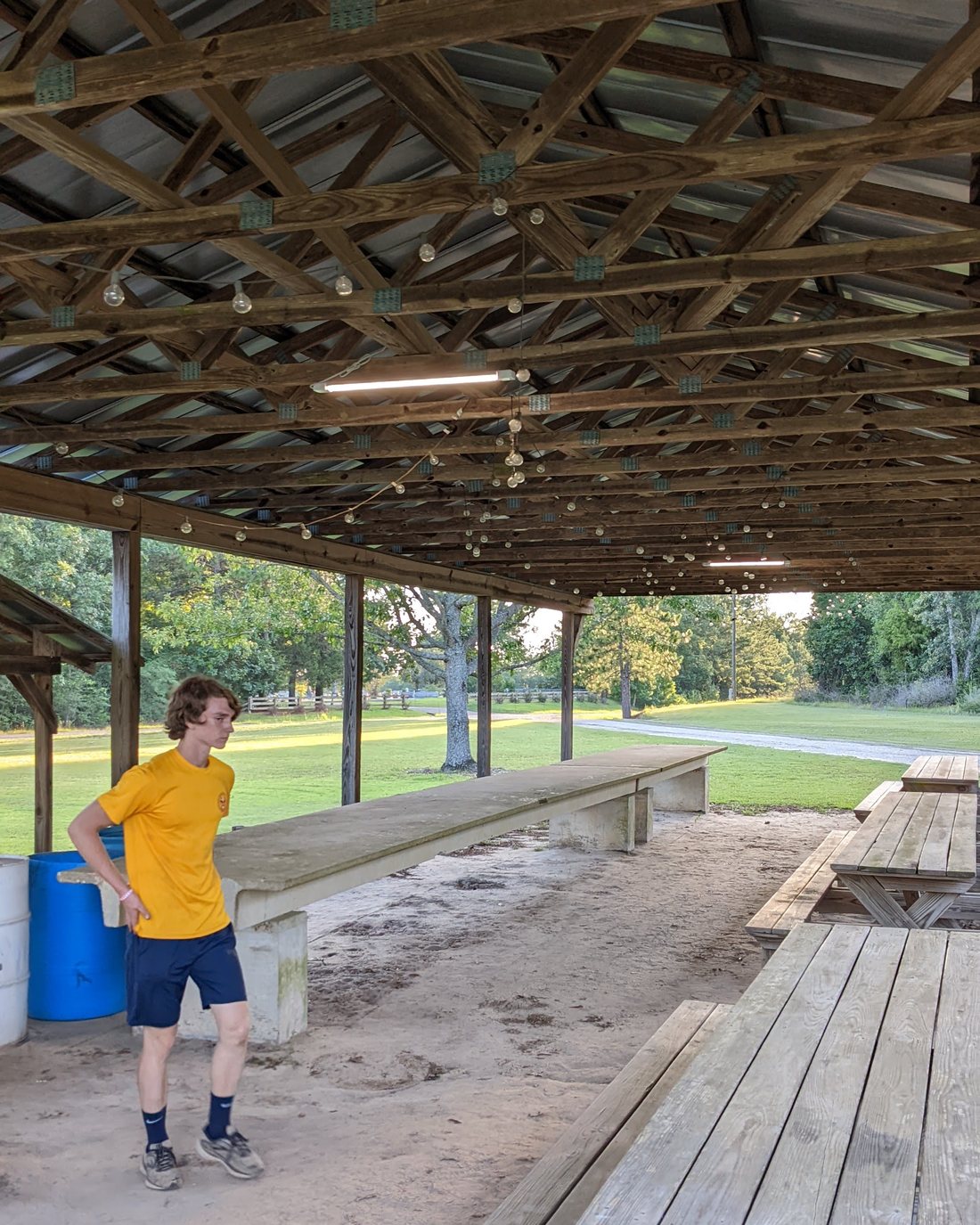
Eight people contributed 28 hours between the class and the install. Materials came to $315.22 against a $650 estimate, and $63.04 of that was donated by a supplier after we asked. The photograph at the top of this page was taken in May 2023, nine months after the work, with everything still in place and in service.
06
What I’d do differently
Sequence the work so nobody is waiting
The hardest part of running the crew was keeping everyone busy. Parts of the job could not start until other parts finished — wire cannot go into a box until the box is mounted and the conduit is in — which left one or two scouts with nothing to do for a few minutes at a stretch. Laying the dependencies out in advance and building a second, independent task to absorb the slack would have fixed it. That is a scheduling problem, and I did not treat it as one until I was standing in it.
Confirm the parts fit each other, not just the spec
The switch covers we bought did not fit the switches, and we lost time finding replacements mid-build on a day with no margin for a trip to the store. Every item on that bill of materials was correct on its own; two of them were not correct together. Dry-fitting one set of each before buying the rest would have caught it.
Test the assumption earlier than I did
Measuring the fixtures cut the count from sixteen to two — but I ran that test after writing a proposal built on sixteen. Doing it first would have produced a plan that was right from the start, rather than a plan that needed correcting. It is the same lesson either way: the cheapest thing to check is the number everything else depends on.
Figures, materials and quotations drawn from the Eagle Scout Service Project Workbook submitted for this project — Chattahoochee Council, Saugahatchee District, Troop 371. Project completed 13 August 2022.